
Class 9 New Science Book 2026 Ch3 Tissues in Action
This chapter explains how specialised cells work together to form tissues and how different tissues perform specific functions in plants and animals.
Chapter Overview
Multicellular organisms contain many different types of cells. These cells become specialised to perform particular functions. A group of specialised cells working together forms a tissue.
The chapter develops two important ideas: division of labour and the relationship between structure and function. Different tissues perform different jobs, allowing the organism to grow, survive and function efficiently.
Organisation in Living Organisms
At each level of organisation, smaller structures work together to perform increasingly complex functions.
This organisation allows specialised cells to contribute to the larger functions of tissues, organs and organ systems.
What You Will Learn
Understand the meaning of tissue and why tissues are important in multicellular organisms.
Study tissues involved in plant growth, protection, support, storage and transport.
Learn how actively dividing cells help plants grow.
Explore specialised tissues and their different functions.
Understand the classification and organisation of permanent tissues.
Study the major tissues that make up the animal body.
Understand protection, support, binding and transport.
Learn how movement, communication and coordination are achieved.
Plant Tissues
Plant tissues are specialised to perform important functions such as growth, protection, support, storage and transport.
Meristematic tissues contain actively dividing cells and are responsible for plant growth. They include apical, lateral and intercalary meristems.
Permanent tissues are specialised for particular functions. Important examples include parenchyma, collenchyma and sclerenchyma.
The transport tissues xylem and phloem form an important part of the plant transport system. Xylem mainly transports water and minerals, while phloem transports food.
Animal Tissues
Animal tissues are specialised for protection, support, movement, transport and coordination.
Epithelial tissue forms coverings and linings and provides protection and helps in exchange of substances.
Connective tissue connects, supports and binds different parts of the body. Examples include blood, bone, cartilage, adipose tissue, tendons and ligaments.
Muscular tissue contains cells capable of contraction and helps produce movement.
Nervous tissue receives and transmits signals and helps coordinate activities of the body.
Structure and Function
A central idea of the chapter is that the structure of a tissue is closely related to the function it performs.
The shape, arrangement and special features of cells make each tissue suitable for its particular role. Understanding this connection makes it easier to explain why different tissues are adapted to perform different functions.
Musculoskeletal System and Joints
Movement in animals depends on the coordinated action of bones, muscles, joints, cartilage, tendons and ligaments.
Joints allow different parts of the skeleton to move. Tendons connect muscles to bones, while ligaments help connect bones and stabilise joints. These structures work together to support controlled movement.
Tissues in Real Life
The concepts in this chapter can be connected with many real-life observations and situations.
- Growth of stems and annual rings can be related to the activity of tissues involved in secondary growth.
- Damage to bark and transport tissues can affect the growth and survival of a plant.
- The strong fibres of coconut husk provide an example of tissue adapted for strength and support.
- In animals, injuries involving bones, cartilage, tendons or ligaments show the importance of specialised tissues.
- Healthy tissues depend on proper nutrition, activity and care of the body.
Learning Outcomes
After completing this chapter, students should be able to:
- Define tissues and explain their importance in multicellular organisms.
- Classify major types of plant and animal tissues.
- Explain the relationship between structure and function.
- Describe the role of meristematic and permanent tissues in plants.
- Explain the functions of xylem and phloem.
- Identify the major animal tissues and explain their functions.
- Explain how bones, muscles, tendons, ligaments and joints contribute to movement.
- Apply the concepts of tissues to real-life biological examples.
Why This Chapter Is Important
This chapter builds the connection between cells and complete organisms.
Once the organisation and functions of tissues are understood, it becomes easier to understand organs, organ systems, growth, transport, movement and coordination in living organisms.
Quick Revision Map
Plants: Meristematic and permanent tissues → growth, protection, support, storage and transport.
Animals: Epithelial, connective, muscular and nervous tissues → protection, support, movement and coordination.
Class 9 New Science Book 2026 Ch3 Tissues in Action
🧬 Tissues in Action — Exercise Questions & Answers
Concept-based questions, explanations and key concepts.
“`1. Meristematic Tissues
(iii) They have thin walls, dense cytoplasm and large prominent nucleus.
Meristematic cells are actively dividing cells that contribute to the growth of plants.
They have thin cell walls, dense cytoplasm and a large, prominent nucleus. These features support continuous cell division and make the cells suitable for producing new cells.
2. Transport of Food in Plants
(ii) Phloem
Phloem transports prepared food from the leaves to other parts of the plant, including roots, stems, fruits and growing regions.
Therefore, if food cannot move from the leaves to the roots, the phloem tissue is malfunctioning.
3. Epithelial Tissue and Exchange of Materials
(iii) To allow quick exchange of materials across them.
Thin epithelial tissues provide a short distance for substances to pass through. This allows rapid diffusion and exchange of materials.
For example, the thin epithelial lining of the air sacs in the lungs helps oxygen and carbon dioxide move efficiently between the air and blood.
4. Movement During Two Types of Jumps
Straight-leg jump: Keep knees and ankles stiff.
Normal jump: Bend knees and ankles naturally.
How did your ankle, knee and hip positions differ between the two jumps?
In the straight-leg jump, the knees and ankles remain relatively stiff with very little bending, making the jump harder and less flexible. In the normal jump, the knees, ankles and hips bend naturally, helping the body absorb shock and produce a more effective jump.
When the knees, ankles and hips bend during a normal jump, the muscles and joints work together to store and release energy while also helping absorb the impact when landing.
Keeping the joints stiff reduces this natural movement and makes the jump less comfortable and less efficient.
5. Type of Joint in the Knee and Ankle
(ii) Hinge
A hinge joint allows movement mainly in one direction, similar to the opening and closing of a door.
The knee is a hinge-type joint, and the ankle permits mainly hinge-like movements such as bending the foot upward and downward.
6. Assertion–Reason Questions
(i) Both (A) and (R) are true, and (R) is the correct explanation of (A).
(ii) Both (A) and (R) are true, but (R) is not the correct explanation of (A).
(iii) (A) is true, but (R) is false.
(iv) (A) is false, but (R) is true.
The assertion is true because the epithelial lining involved in gas exchange in the lungs is very thin, allowing oxygen and carbon dioxide to diffuse efficiently.
The reason is false because the gas-exchange surface is not made of multiple layers of tall cells. Such a thick arrangement would make diffusion more difficult.
Cardiac muscle contracts continuously throughout life to keep the heart pumping blood.
Cardiac muscle cells contain many mitochondria for aerobic energy production and receive a rich supply of oxygen and nutrients through the blood. These adaptations support their continuous activity.
The assertion is false because ligaments connect bone to bone, whereas tendons connect muscle to bone.
The reason is true. Tendons are strong connective tissues that transmit the force produced by muscles to bones, helping produce movement.
The assertion is true because a hinge joint allows movement mainly in one plane, such as bending and straightening.
The reason is false because hinge joints do not allow the bones to slide freely in all directions. Movement is restricted mainly to a back-and-forth direction.
🔑 Class 9 Tissues in Action — Quick Answer Key
Q1: (iii) Thin walls, dense cytoplasm and large prominent nucleus.
Q2: (ii) Phloem.
Q3: (iii) To allow quick exchange of materials.
Q4: Normal jumping involves natural bending of the knees, ankles and hips, while the straight-leg jump keeps them relatively stiff.
Q5: (ii) Hinge.
Q6: A – (iii) | B – (i) | C – (iv) | D – (iii)
“`Question 7 — Class 9 New Science Book 2026 Ch3 Tissues in Action
Plot a graph between the age of a tree (in years) on the x-axis and the diameter of the tree (in cm) along with the number of annual rings formed over time on the y-axis, using the data given in Table 3.7.
Table 3.7: Data related to the age of a teak tree, diameter of stem and annual rings
| S. No. | Age (Years) | DBH (Diameter) (cm) | Annual Rings |
|---|---|---|---|
| 1 | 5 | 4 | 5 |
| 2 | 10 | 8 | 10 |
| 3 | 20 | 24 | 20 |
| 4 | 25 | 28 | 25 |
| 5 | 30 | 32 | 30 |
| 6 | 40 | 40 | 40 |
Graph — Age of Tree vs Diameter and Annual Rings
Plot the following points on the graph: (5,4), (10,8), (20,24), (25,28), (30,32), (40,40) for diameter and (5,5), (10,10), (20,20), (25,25), (30,30), (40,40) for annual rings.
Complete Answer — Class 9 New Science Book 2026 Ch3 Tissues in Action
(i) Interpretation of the graph
The graph shows that the diameter of the teak tree increases with increasing age. As the tree becomes older, its stem becomes thicker. This increase in the girth of the stem occurs because of secondary growth.
The graph also shows that the number of annual rings increases with age. Therefore, annual rings can provide an indication of the age of the tree.
(ii) Relationship between diameter and annual rings
There is a clear positive relationship between the diameter of the teak tree and the number of annual rings. As the tree grows older, more annual rings are formed and the diameter of the stem generally increases.
(iii) Tissue responsible for increase in girth
The specialised tissue responsible for increasing the girth of the stem is the lateral meristem, particularly the vascular cambium.
It is located between the xylem and phloem. The cambium produces new vascular tissues, causing the stem to become thicker as the plant grows.
Key Concept
Age increases → annual rings increase → secondary growth continues → stem diameter increases.
Class 9 New Science Book 2026 Ch3 Tissues in Action — Exercise Answer
Understanding the role of bark and the tissues present beneath it helps us explain how debarking can affect the survival and functioning of a tree.
Question 8
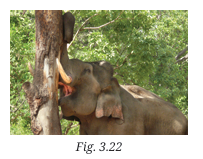
In a forest, it was observed that one of the trees was severely debarked by an elephant to meet its food requirements, as the bark is a rich source of nutrients. Based on your learning, answer the following:
- Which function(s) of the tree is/are hampered by debarking?
- Which plant tissue would be affected by further damage to the tree trunk even after debarking?
- Which function of the tree would be hampered if the tissues beneath the bark were severely damaged?
- What assumptions are you making to answer the questions above? How would the answer change if your assumptions are also changed?
✓ Complete Answer
(i) Which function(s) of the tree are hampered by debarking?
Debarking mainly damages or removes the outer protective tissues of the stem and may also damage the phloem present beneath the bark.
If the phloem is damaged, the transport of food prepared in the leaves to other parts of the plant is hampered. The damaged bark also reduces the protective function of the stem and can make the inner tissues vulnerable to injury, pathogens and water loss.
(ii) Which plant tissue would be affected by further damage to the tree trunk?
If the tree trunk is damaged further after debarking, the vascular tissues inside the stem may be affected, especially the phloem, cambium and xylem, depending on the depth of the damage.
The phloem lies toward the outer side of the vascular tissue, while the vascular cambium lies between the phloem and xylem. Deeper injury can therefore damage these tissues and interfere with transport and secondary growth.
(iii) Which function would be hampered if tissues beneath the bark were severely damaged?
If the tissues beneath the bark are severely damaged, the transport of food and water through the stem can be affected.
Damage to the phloem would interfere with the movement of prepared food from leaves to roots and other growing or storage regions. If the damage also reaches the xylem, the upward transport of water and minerals from the roots to the leaves would also be affected.
Phloem → transports prepared food.
Xylem → transports water and minerals.
(iv) What assumptions are being made? How would the answer change if they change?
The answers above assume that the term debarking means that the outer bark has been removed and that the underlying vascular tissues are not completely destroyed.
We also assume that the question is referring to a typical woody stem in which secondary growth occurs and where phloem, cambium and xylem have their usual positions.
If only the outer protective bark is removed, the major immediate concern is loss of protection and possible damage to the phloem. If the damage extends deeper and destroys the cambium and xylem, secondary growth and water-mineral transport can also be severely affected. Therefore, the answer depends on the depth and extent of the injury.
Quick Revision
Debarking → loss of protection and possible phloem damage
→ reduced food transport.
Deeper trunk damage → may affect phloem, cambium and xylem
→ food transport, secondary growth, and water-mineral transport
may be affected.
9. Aamrapali observed that a young mango sapling’s stem bends flexibly during monsoon winds and does not break. Which tissue is responsible for this flexibility? Predict and provide your explanation of the impact if the existing tissue was replaced by sclerenchyma.
Collenchyma tissue is responsible for the flexibility of the young mango sapling stem. Collenchyma cells provide mechanical support while allowing bending and flexibility.
If collenchyma were replaced by sclerenchyma, the stem would become hard and rigid because sclerenchyma cells have thick lignified walls. The sapling would lose flexibility and could break easily during strong winds.
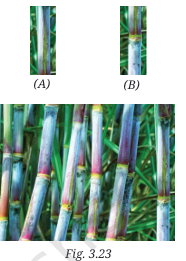
10. Sohan designed an experiment for the regeneration of sugarcane, where he used cuttings to grow sugarcane. He used two types of cuttings, type ‘A’ and type ‘B’. After a few weeks, type ‘B’ cuttings sprouted and developed into sugarcane plants, whereas the type ‘A’ cuttings did not sprout.
(i) Why were the type ‘B’ cuttings able to grow as sugarcane but type ‘A’ could not?
Answer: Type ‘B’ cuttings were able to grow because they contained nodes with buds or meristematic tissue capable of cell division and growth. Type ‘A’ lacked these growing regions.
(ii) What difference was present in type ‘B’ compared to type ‘A’?
Answer: Type ‘B’ had nodes with buds or meristematic tissue, whereas type ‘A’ did not.
(iii) What observation or measurement was made to determine whether this change had an effect?
Answer: The sprouting and growth of new shoots and roots were observed to determine the effect.
(iv) What parameters should be kept the same for both types of cuttings to ensure a fair comparison?
Answer: Both cuttings should receive the same amount of water, sunlight, soil, temperature, nutrients, and time for growth. This ensures that the comparison is fair and the difference in growth is due to the type of cutting.
Class 9 New Science Book 2026 Ch3 Tissues in Action
Exercise Questions 11–15 • Detailed Answers • Conceptual Understanding
Simple and Complex Tissues
Rohan’s statement is correct for simple tissues, which are made up of similar types of cells that generally perform the same function. Examples include parenchyma, collenchyma and sclerenchyma.
Rajiv is correct because complex tissues consist of different types of cells that work together to perform a common function.
For example, xylem contains tracheids, vessels, xylem parenchyma and xylem fibres. These different cell types work together mainly in the transport of water and minerals and also provide support.
Similarly, phloem consists of different types of cells that work together to transport food from the leaves to other parts of the plant.
Coconut Husk Fibres and Sclerenchyma
The strength and toughness of coconut husk fibres are mainly due to sclerenchyma tissue.
Sclerenchyma cells have thick, lignified cell walls, which make them hard, rigid and strong. At maturity, these cells are generally dead and have little or no internal cell contents.
Parenchyma cannot provide the same mechanical strength because its cells usually have thin and flexible cell walls and are living. Their major functions include storage, photosynthesis and repair rather than providing strong mechanical support.
Thick and lignified cell walls make sclerenchyma cells hard and provide high mechanical strength.
Location of Meristematic Tissue
Vibha’s statement is incorrect because meristematic tissues are not restricted to the root and shoot apices.
1. Apical Meristem
It is present at the root and shoot tips and is responsible for increasing the length of the plant.
2. Lateral Meristem
It includes the cambium and helps in increasing the girth or thickness of stems and roots.
3. Intercalary Meristem
It is found near the nodes or bases of leaves in some plants, especially grasses. It helps in the regrowth of parts after cutting or grazing.
“If meristematic tissue occurs only at the root and shoot tips, how does a tree increase in thickness and how do grasses grow again after being cut?”
Plant Cell and Animal Cell
(i) Which cell is likely to have a larger vacuole? Give reasons.
The plant cell is likely to have a much larger vacuole. A mature plant cell generally contains a large central vacuole surrounded by the tonoplast.
The vacuole stores water, dissolved substances, food materials and wastes. It also helps maintain turgor pressure, which keeps the plant cell firm.
Animal cells may contain small vacuoles or temporary storage vesicles, but they generally do not have one large central vacuole like a mature plant cell.
(ii) What assumptions are you making while answering the question above?
The answer assumes that both cells are mature and healthy cells under normal conditions.
- The plant cell is assumed to be a typical mature plant cell.
- The animal cell is assumed to be a typical healthy animal cell.
- Both cells are being compared under normal conditions.
The size and number of vacuoles can vary depending on the type, age and function of the cell.
Do Plant Tissues Always Perform Only One Function?
I would not completely agree with the statement because some plant tissues can perform more than one function.
To examine the correctness of the statement, the following questions can be asked:
- Can a plant tissue perform more than one function?
- Does the function of a tissue depend on its structure and location?
- Can the same type of tissue have different roles in different parts of a plant?
- Are support, storage and transport always carried out by completely separate tissues?
Example 1 — Parenchyma
Parenchyma can store food and water. When it contains chlorophyll, it can also perform photosynthesis.
Example 2 — Collenchyma
Collenchyma provides mechanical support while also allowing flexibility in young plant parts.
Example 3 — Xylem
Xylem transports water and minerals and also provides mechanical support because many of its elements have lignified walls.
Example 4 — Phloem
Phloem mainly transports food from one part of the plant to another. Its different components work together to make this transport possible.
Plant tissues are specialised for particular major functions, but a tissue may contribute to more than one function. Therefore, the statement that every plant tissue performs only one specific function is an oversimplification.
Parenchyma → storage + photosynthesis (when chlorophyll is present) | Collenchyma → support + flexibility | Xylem → transport + support | Phloem → food transport
🚀 The Journey Beyond
🩺 Visit a doctor and find out what happens in ligament rupture, cartilage rupture, and fracture of bones.
🥗 How can we reduce the risk of these injuries by changing our lifestyle and maintaining a balanced nutritional diet?
📝 Answer
🛡️ Ways to Reduce the Risk
- Eat a balanced diet rich in calcium, protein, vitamin D, and minerals.
- Exercise regularly to strengthen bones and muscles.
- Maintain proper body weight.
- Avoid smoking and excessive junk food.
- Use proper posture and protective equipment during sports and physical activities.
- Get enough sunlight for vitamin D production.
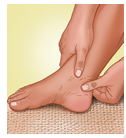
🔍 Activity: Observation of Tendons
- Sit with your feet flat on the floor.
- Place your fingers on the back of your ankle just above the heel.
- Point your toes down and up, and you will feel the tendon moving.
Class 9 Updated New Science Book 2026 Solutions
Explore chapter-wise solutions, concepts, explanations, and study resources for the Class 9 Updated New Science Book 2026.
📚 NCERT Solutions & Study Resources
Explore NCERT solutions, Oxford book solutions, Mathematics, Science, Physics, Chemistry, Biology and more — organized class-wise.
🎓 Class 12 — NCERT Solutions
📘 Class 11 — NCERT Solutions
📗 Class 10 — NCERT Solutions
📕 Class 9 — NCERT Solutions
📙 Class 8 — Solutions
📒 Class 7 — Solutions
📓 Class 6 — Solutions
🏛️ Official NCERT Textbooks
Access the official NCERT textbook portal for Class 10 Mathematics and other NCERT textbooks directly from the NCERT website.
Visit Official NCERT Website ↗
Class 9 New Science Book 2026 Chapter 3 – Tissues in Action explains how groups of similar cells work together to perform specific functions in plants and animals. In this chapter, students will learn about plant tissues, animal tissues, their structure, functions, and importance in living organisms. The chapter includes easy explanations, real-life examples, diagrams, and NCERT-based solutions to help students understand the concepts clearly and prepare well for exams.