
Comprehensive guide for Class 7 Science Oxford Book Wastewater Management. We break down the ‘Wastewater Story,’ providing clear answers to short and long questions, fill-in-the-blanks, and diagram labeling.
I. Objective type questions
A. Fill in the blanks with the correct words.
- An excessive growth of ______________ (plants/algae) causes eutrophication.
- ______________ (Sewer/Onsite disposal) system is a channel system of pipelines used to carry sewage.
- Air is blown into the sewage in ______________ (sedimentation/aeration) tanks.
- ______________ (LPG/Biogas) is produced by the action of bacteria on the organic matter of the sludge.
- ______________ (Earthworms/Ants) are used to convert human excreta into compost in vermi-composting toilets.
Ans:
- An excessive growth of algae causes eutrophication.
- Sewer system is a channel system of pipelines used to carry sewage.
- Air is blown into the sewage in aeration tanks.
- Biogas is produced by the action of bacteria on the organic matter of the sludge.
- Earthworms are used to convert human excreta into compost in vermi-composting toilets.
B. Choose the correct option.
1. Which of the following is not a source of wastewater? a. Hospitals b. Mining c. Rain d. Domestic activities
Answer: c. Rain * Explanation: Rainwater in its natural form is not wastewater; it only becomes wastewater if it mixes with pollutants on the ground (like street runoff).
2. Which one of these is a mechanical process of treating wastewater? a. Screening of sewage b. Digestion of sewage c. Aeration of sewage d. Addition of chlorine to water
- Answer: a. Screening of sewage
- Explanation: Screening is a physical/mechanical process that uses bar screens to remove large solid objects like rags, plastics, and sticks.
3. Which out of the following methods can be used to dispose sludge? a. Incineration b. Addition of chlorine c. Aeration d. Sedimentation
- Answer: a. Incineration
- Explanation: Dried sludge can be disposed of by incineration (burning to ashes), or it can be used as manure or to produce biogas.
4. Which of the following is a water-borne disease? a. Tuberculosis b. Asthma c. Cancer d. Cholera
- Answer: d. Cholera
- Explanation: Cholera is an infectious disease that causes severe watery diarrhea, typically contracted from water supplies contaminated with human feces.
5. Which out of the following is an alternative method of sewage disposal? a. Sewer system b. Vermi-composting toilets c. Biogas plants d. Both b and c
- Answer: d. Both b and c
- Explanation: Vermi-composting toilets and biogas plants are low-cost, on-site sewage disposal alternatives to traditional, centralized sewer pipeline systems.
6. Which of the following is the result of improper management of sewage? a. Biogas b. Water pollution c. Clean water d. Vermi-composting
- Answer: b. Water pollution
- Explanation: Untreated or improperly managed sewage flowing into water bodies directly causes severe water pollution.
7. What is the solid waste that settles at the bottom in the primary treatment of wastewater called? a. Sludge b. Clarified water c. Scum d. Compost
- Answer: a. Sludge
- Explanation: During primary treatment in sedimentation tanks, heavier solid wastes like feces settle at the bottom and are collected as sludge.
8. Which one of these is a biological process of treating wastewater? a. Screening of sewage b. Exposure to ultraviolet light c. Aeration of sewage d. Addition of chlorine to water
- Answer: c. Aeration of sewage
- Explanation: Aeration pumps air into the water to help aerobic bacteria grow and biologically consume the human waste, food waste, and other organic matter.
9. Which of the following treatments involves addition of chlorine? a. Primary treatment b. Secondary treatment c. Tertiary treatment d. Initial treatment
- Answer: c. Tertiary treatment
- Explanation: Tertiary (or advanced) treatment is the final stage where water is disinfected using chemicals like chlorine or ozone before being released into the environment.
10. Which of the following can be used to control the generation of sewage? a. Fix leakages in sewer pipes b. Use flushes with low capacity c. Dispose plastics in garbage can d. All of these
- Answer: d. All of these
- Explanation: Conserving water through low-capacity flushes, preventing pipe blockages/breaks, and properly throwing solid waste in bins all help reduce and control sewage at the source.
II. Very short answer type questions
Give one word for the following.
Ans:
- A channel system of pipelines used to carry sewage: Sewerage
- Facility that treats wastewater from domestic as well as industrial sources: Wastewater Treatment Plant (or Sewage Treatment Plant)
- Light waste that rises to the top and floats in sedimentation tanks during primary treatment of wastewater: Scum
- The water that comes out of the sedimentation tanks after the completion of primary process: Clarified water (or Primary effluent)
- Burning of sludge to ashes: Incineration
III. Short Answer Type Questions
1. List the different sources of wastewater. Wastewater primarily comes from the following sources:
- Domestic: Homes and residential areas (water from sinks, showers, and toilets).
- Industrial: Factories and manufacturing plants discharging chemical and chemical-laced water.
- Commercial: Hospitals, hotels, offices, and restaurants.
- Agricultural: Runoff from farms containing animal waste, pesticides, and fertilizers.
- Rainwater: Surface runoff during heavy rain that washes pollutants from roads and streets into drains.
2. How does a sewer system function?

A sewer system is an underground network of interconnecting pipes called sewers. It functions by collecting wastewater generated at various sources (like homes and industries) and transporting it, usually using the natural flow of gravity or pumping stations, to a central wastewater treatment plant. Once treated, the safe water is released back into the environment.
3. How can we convert sludge into useful substances?
Ans: Sludge is the solid waste that settles at the bottom of wastewater during primary treatment. To convert it into useful substances, it is moved to a separate digestion tank where anaerobic bacteria decompose it. This decomposition process produces biogas, which can be used as a fuel for heating or to generate electricity. The remaining decomposed solid matter is then dried and used as nutrient-rich manure or fertilizer for agriculture.
4. Why is it important to maintain proper sanitation in public places?
Ans: Public places, such as railway stations, bus depots, and hospitals, accommodate large numbers of people every day. If proper sanitation is not maintained, large amounts of waste will accumulate. This creates a breeding ground for disease-carrying flies, mosquitoes, and rodents, which can lead to the rapid outbreak and spread of infectious diseases (like cholera, typhoid, and dengue) among the public.
IV. Long answer type questions
1.Suggest measures to control the generation of sewage.
Ans: Measures to Control the Generation of Sewage
Reducing the volume and toxicity of sewage at the source is the most effective way to manage it.
Separate Stormwater: Divert rainwater away from sewer drains using rain barrels or permeable landscaping. In cities with combined sewer systems, heavy rain can overwhelm treatment plants and cause raw sewage to overflow into rivers.
Reduce Water Consumption: The less water you use, the less sewage you produce. Simple habits like turning off the tap while brushing teeth, fixing leaky faucets, and taking shorter showers make a significant difference.
Install Water-Efficient Fixtures: Low-flow toilets, showerheads, and washing machines drastically reduce the amount of water sent down the drain.
Prevent Drain Clogging: Never pour fats, oils, or grease (FOG) down the kitchen sink. They solidify in pipes and cause sewage backups. Scrape them into the trash instead.
Dispose of Solid Waste Properly: Do not use the toilet as a trash can. Flushing items like sanitary products, wet wipes (even “flushable” ones), and dental floss adds solid waste to the sewage system and causes blockages.
Minimize Chemical Pollution: Reduce the use of harsh chemical cleaners, pesticides, and fertilizers. When washed down the drain or carried by runoff, these chemicals make sewage much harder and more expensive to treat.
2. Discuss the problems faced due to improper management of wastes.
Ans: When solid and liquid wastes are not managed, treated, or disposed of correctly, the consequences ripple across public health and the environment.
Economic Strain: Poor waste management damages local economies by discouraging tourism, decreasing property values, and drastically increasing healthcare costs due to waste-related illnesses.
Public Health Crises: Untreated sewage and uncollected garbage are breeding grounds for pathogens and vectors like mosquitoes and rats. This leads to the rapid spread of waterborne and vector-borne diseases, including cholera, typhoid, dysentery, and malaria.
Water Contamination: Leachate from open dumps and untreated sewage discharges contaminate both surface water (rivers, lakes) and vital groundwater aquifers, making the water unsafe for drinking, agriculture, or recreation.
Environmental Degradation: Organic waste dumped into water bodies triggers a process called eutrophication. Algae feed on the nutrients in the waste, bloom rapidly, and deplete the water’s oxygen, killing fish and other aquatic life.
Air Pollution: Decomposing organic waste in open dumps releases methane, a potent greenhouse gas that contributes to climate change. Open burning of waste releases toxic fumes and particulate matter into the air.
3. Explain alternative methods of sewage disposal.
Ans: For areas without access to centralized, underground municipal sewer networks, localized and alternative systems are highly effective.
1. Septic Tanks
Septic systems are the most common alternative for rural or suburban homes. Wastewater flows from the house into an underground, watertight tank. Solids settle at the bottom (sludge) where anaerobic bacteria break them down, while oils float to the top (scum). The relatively clear liquid in the middle flows out into a drain field, where it is naturally filtered by the soil.
2. Composting Toilets
These systems treat human waste without the use of water. They use a biological process called composting to break down waste into a pathogen-free, nutrient-rich material (humus) that can be safely returned to the soil. Carbon-rich materials like sawdust or peat moss are added to aid decomposition and eliminate odors.
3. Biogas Plants
In a biogas plant, human and animal waste is enclosed in an oxygen-free tank (digester). Anaerobic bacteria break down the organic matter, producing biogas—a mixture primarily of methane and carbon dioxide. This gas can be captured and used as a clean fuel for cooking or generating electricity, while the remaining slurry serves as a high-quality agricultural fertilizer.
4. Chemical Toilets
Often used as temporary solutions (like at construction sites, festivals, or on airplanes), these toilets use chemical compounds to disinfect the waste, break it down, and mask odors. The holding tanks must be routinely pumped out and the contents transported to a proper treatment facility.
Class 7 Science Oxford Book Wastewater Management – Extra
C. Name the following.
1.The wastewater that is released from industries
Ans: Industrial effluent
2.The set-up of grids that filter and remove the large ob wastewater
Ans: Screening at grit tank
3. The network of pipes that transport sewage in a city
Ans: Sewage system
4. The openings along sewers that are used to maintain
Ans: Manholes
5. The instrument used to remove scum during sewage
Ans: Skimmer
D. Define the following terms.
F. Answer the following questions in brief.
1.What happens in the digester of a biogas plant?
Ans: Activated sludge that contains 2% solids and 98% water is passed onto the digester. The organic waste in the sludge is broken down with the help of anaerobic bacteria in the digester. This process is called digestion and as a result of it, biogas is produced.
2. What is sanitation?
Ans: Sanitation is the hygienic practice of ensuring cleanliness in our surroundings through management of human waste, correct treatment and disposal of sewage and by providing clean water. Maintaining proper sanitation can be done by ensuring proper usage of toilets, sewer systems, treatment of wastewater, safe disposal of garbage and implementation of personal hygiene practices.
G. Answer the following questions in detail.
1.What is sewage? Explain a few effects of the release of untreated sewage into the surroundings.
Ans: Wastewater from homes in rural and urban areas contains human waste that contaminates water with germs. Other substances present in wastewater are soap, detergent, food wastes, cleaning agents, oil, paints, dyes, plastic, paper, etc
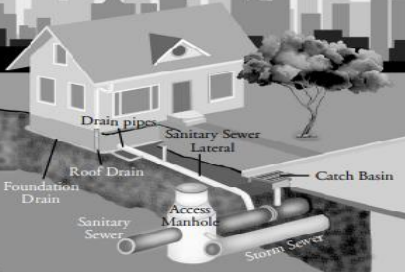
2. Draw a simple diagram of the sewage system in cities.
4. Explain the main steps involved in sewage treatment.
Ans: a) Primary treatment: During primary treatment, the sewage flows very slowly through a grit chamber
so that sand, pebbles and soil settle down at the bottom. Thus, primary treatment involves a mechanical
process. The sewage then flows into the settling tank or sedimentation tank where solid wastes such as
faces are allowed to settle. Wastes such as soaps, oils and grease rise to the top of the wastewater. The
waste material that settles down at the bottom is called sludge and the floatable material is called scum.
The scum is then removed from the top using a skimmer. The sludge at the bottom is removed with a
scraper every few days and treated further. The water that is left is called primary clarified water.
b) Secondary treatment: During secondary treatment, sludge and any biological or organic wastes that
remain in clarified water are removed by biological processes. Clarified water is transferred into an
aeration tank where air is bubbled through it by air blowers. This process is called aeration. Aeration
encourages aerobic bacteria to grow and feed on organic contaminants such as food waste and faces. The
bacteria produce biogas during the process. The leftover liquid waste is transferred to the clarifier. It is
then allowed to remain in tanks so that microscopic organisms settle at the bottom in the form of activated
sludge. Activated sludge contains 2% solids and 98% water. It is then passed onto the digester. The
organic waste in the sludge is broken down with the help of anaerobic bacteria. This process is called
digestion and as a result of it, biogas is produced.
The biogas produced in the secondary treatment can be used either as a fuel or to produce electricity. The sediment in the digester is then left in sand-drying beds where some water drains out and some evaporates. The remaining dried sludge can be used to make fertilizers or compost.
c) Tertiary treatment: Tertiary treatment is the last stage in wastewater treatment and it involves a
chemical process. The secondary clarified water from the clarifier is treated with chlorine to remove
compounds of phosphorus and nitrogen and to kill bacteria. Chlorine acts as a disinfectant. The use of
chlorine to kill germs in wastewater is called chlorination. After treatment, thwater becomes fit to bereleased into water bodies
4. Suggest some methods that can be followed to control the amount of sewage generation in our homes.
Ans: Some methods that can be followed to control the amount of sewage generation in our homes:
a) We should be careful about the disposal of substances down the drain in our homes.
b) We should not pour cooking oils and fats down the drain as they cause blockage. They should always be disposed of in bins.
c) Solid wastes from kitchen such as tea leaves, fruit and vegetable peels and pulps, and other soft solids
such as cotton, tissue papers, wet wipes and diapers can block sewers.
d) Chemicals present in everyday liquids such as cleaning agents, beauty products, medicines, paints, and
insecticides cannot be removed from wastewater during sewage treatment. They require more advanced
treatment to be removed from water. If they contaminate the environment, they can adversely affect living
organisms in different ways.
e) Various wastes also harm microorganisms that are used to degrade sewage.
H. Out of the box!
- Which do you think is preferable: a single pipe for sewage and rainwater or two separate pipes?
Give reasons for your answer.
Ans: It is always better to have two separate pipelines for sewage and rainwater so that the sources of water do not get contaminated - Why are chlorine compounds added to the water in swimming pools?
Ans: Swimming pool has a lot of footfall with people swimming in it and the water may get contaminated with germs, and chlorine acts as disinfectant.
- Chapter 1: Nutrition in Plants
- Chapter 2: Nutrition in Animals
- Chapter 3: Fibre to Fabric
- Chapter 4: Chemicals and Chemical Changes
- Chapter 5: Acids, Bases, and Salts
- Chapter 6: Heat
- Chapter 7: Climate and Adaptations
- Chapter 8: Soil
- Chapter 9: Respiration in Organisms
- Chapter 10: Transportation of Substances in Animals and Plants
- Chapter 11: Reproduction in Plants
- Chapter 12: Motion and Time
- Chapter 13: Electric Current and Its Effects
- Chapter 14: Winds, Storms, and Cyclones
- Chapter 15: Light
- Chapter 16: Water: A Precious Resource
- Chapter 17: Forests: Our Lifeline
- Chapter 18: Wastewater Story
CLASS 8 SCIENCE OXFORD BOOK -ALL CHAPTERS
For the official Class 7 Science Solutions, you can visit:
In conclusion, mastering the concepts of sanitation is the primary goal of the Class 7 Science Oxford Book Wastewater Management chapter. We hope this guide has provided you with accurate and easy-to-understand solutions for the Class 7 Science Oxford Book Wastewater Management exercises. By practicing these questions regularly, students can build a strong foundation for exams covering the Class 7 Science Oxford Book Wastewater Management syllabus. Thank you for choosing our platform as your trusted resource for all your Class 7 Science Oxford Book Wastewater Management study needs.