
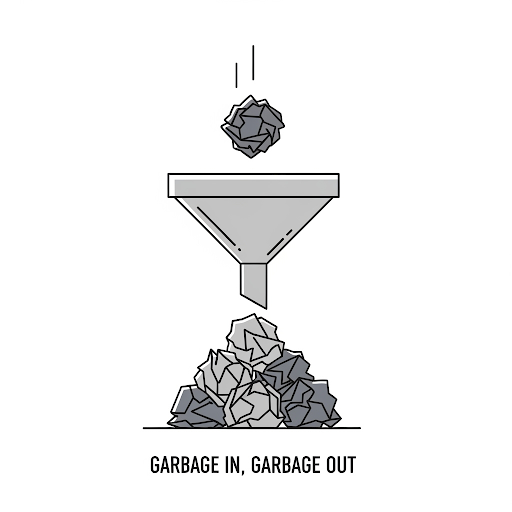
Waste management is one of the most important concerns in our daily life. The chapter “Garbage In, Garbage Out” from Class 6 Science (Oxford) helps us understand how different types of wastes are generated, how they affect the environment, and the proper methods of disposal. It highlights the difference between biodegradable and non-biodegradable wastes, the harmful effects of plastics, and the importance of 3Rs – Reduce, Reuse, and Recycle. The chapter also explains composting, vermicomposting, and the role of landfills in waste management. By learning this chapter, students develop awareness about keeping surroundings clean and adopting eco-friendly habits for a sustainable future.
Class 6 Science Ch Garbage in Garbage out Oxford Textbook Answers
I. Objective type questions
A. Fill in the blanks with the correct words.
- One should prefer __________ (plastic/paper) bags over __________ (plastic/paper) bags.
One should prefer paper bags over plastic bags. - We should use __________ (ballpoint/fountain) pens in order to reduce wastage.
We should use fountain pens in order to reduce wastage. - The __________ (green/blue) bins are used for recyclable wastes.
The blue bins are used for recyclable wastes. - Biodegradable wastes are converted into __________ (compost/plastic) by burying them in compost pits.
Biodegradable wastes are converted into compost by burying them in compost pits.
B. Choose the correct option.
- Wastes that rot by the action of decomposers are called
a. biodegradable waste
b. non-biodegradable waste
c. household waste
d. recyclable waste
Answer: a. biodegradable waste - Which of the following should be put in green bin?
a. Old batteries
b. Glass bottles
c. Fruit and vegetable peels
d. Chocolate wrappers
Answer: c. Fruit and vegetable peels - Which of the following is a biodegradable waste?
a. Tissue paper
b. Hair
c. Tea leaves
d. All of them
Answer: d. All of them - Which of the following organisms is used in vermicomposting?
a. Bacteria
b. Brown worms
c. Tape worms
d. Red worms
Answer: d. Red worms - What makes the excessive usage of plastics a major concern?
a. It is non-biodegradable
b. It is environment friendly
c. It releases harmful gases on burning
d. Both (a) and (c)
Answer: d. Both (a) and (c) - Which of the following is an example of biodegradable waste?
a. Paper cup
b. Plastic cup
c. Glass bottle
d. Copper tumbler
Answer: a. Paper cup - Which of the following organisms cannot degrade biodegradable waste?
a. Virus
b. Bacteria
c. Red worms
d. Fungi
Answer: a. Virus - Which of the following is not a part of 3Rs?
a. Recycle
b. Reuse
c. Repeat
d. Reduce
Answer: c. Repeat - Which of the following should be put in blue bin?
a. Polythene bags
b. Old batteries
c. Chocolate wrappers
d. All of these
Answer: d. All of these - What are large areas used for waste disposal called?
a. Garbage dump
b. Landfill
c. Green bin
d. Parks
Answer: b. Landfill
II. Very short answer type questions
1. Give one word for the following:
a) Wastes that do not rot or decompose by the action of decomposers – Non-biodegradable wastes
b) Recycling of organic waste by burying them in compost pits – Composting
c) Composting with the help of red worms – Vermicomposting
d) Reprocessing waste materials used to make new products – Recycling
III. Short answer type questions
1. Differentiate between biodegradable and non-biodegradable wastes.
- Biodegradable wastes: Wastes that can be decomposed by microorganisms (e.g., fruit peels, paper, leftover food).
- Non-biodegradable wastes: Wastes that cannot be decomposed by microorganisms (e.g., plastics, glass, metals).
2. Why should we not burn plastic wastes?
We should not burn plastic wastes because burning releases harmful and toxic gases, such as carbon monoxide and dioxins, which pollute the air and harm human health.
3. Non-biodegradable wastes? Why should we have different bins for different types of wastes?
- Non-biodegradable wastes: Plastics, glass, metals, polythene bags, etc.
- We should have different bins because it makes waste segregation easier, biodegradable waste can be composted, and recyclable waste can be sent for recycling.
4. Why should we use paper bags rather than polythene bags?
We should use paper bags rather than polythene bags because paper bags are biodegradable, eco-friendly, and do not cause pollution, while polythene bags are non-biodegradable and harmful for the environment.
5. Suggest two steps each for reducing, reusing, and recycling wastes.
- Reducing: Avoid plastic bags, carry cloth/paper bags. Avoid unnecessary packaging.
- Reusing: Use old jars and bottles for storage, reuse one-sided printed paper.
- Recycling: Send paper, glass, and plastics to recycling plants; recycle kitchen waste into compost.
IV. Long answer type questions | Class 6 Science Ch Garbage in Garbage out Oxford Solution
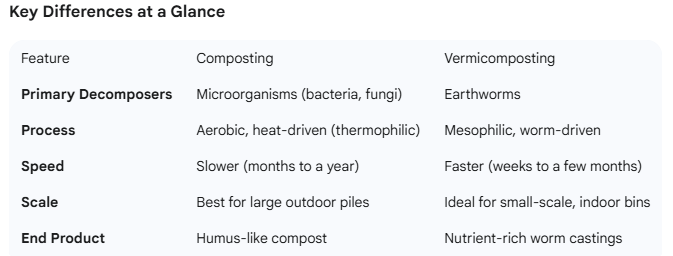
1. Explain the difference between composting and vermicomposting.
Ans: Composting is the process of converting biodegradable waste like fruit peels, vegetable scraps, and garden waste into manure by the action of microorganisms such as bacteria and fungi. It takes more time and happens naturally.
Vermicomposting is a faster method of making compost with the help of red worms (earthworms). The worms break down the waste quickly and produce nutrient-rich compost known as vermicompost.
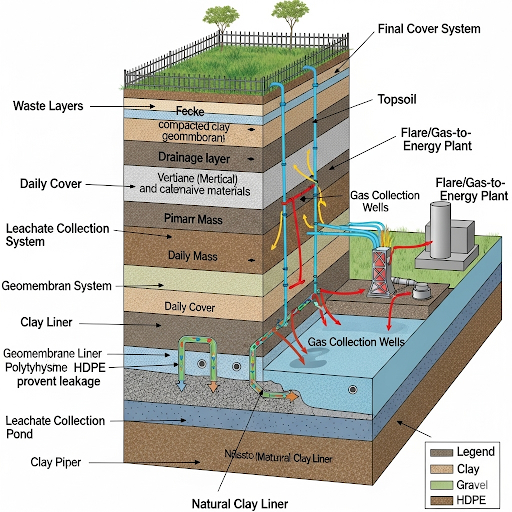
2. What are landfills? Draw a well-labelled diagram for a landfill. Give one example of a landfill.
Ans: A landfill is a site for the safe disposal of waste materials. It is an engineered facility where waste is buried in layers, compacted, and then covered with soil or other materials. Modern landfills are designed to contain the waste and manage the byproducts, such as leachate (contaminated liquid) and landfill gas, to protect the environment.
An example of a large landfill is the Ghazipur Landfill located in Delhi, India. It is one of the oldest and largest landfills in the country, and its towering mound of garbage has become a prominent symbol of urban waste management challenges.
3. Why should we reduce and reuse plastic items? Suggest four ways to reduce, reuse, and recycle plastics.
Ans: Plastics are non-biodegradable, which means they do not decompose easily and remain in the environment for hundreds of years. This causes land, water, and air pollution, and also harms animals and humans. Therefore, we should reduce and reuse plastic items to save our environment.
Ways to reduce, reuse, and recycle plastics:
- Replace – Use eco-friendly alternatives such as steel, glass, or biodegradable materials in place of plastics.
- Reduce – Avoid using plastic bags and carry cloth or jute bags instead.
- Reuse – Use plastic bottles and containers multiple times instead of throwing them away.
- Recycle – Give old plastic items to recycling centers so that they can be made into new products.
Class 6 Science Ch Garbage in Garbage out Oxford Answers
Class 10
Class 9
Class 8
Class 7
Class 6
Class 12
Class 11
- Class 11 Math Solutions
- Class 11 Physics Solutions
- Class 11 Chemistry Solutions
- Class 11 Biology Solutions
Learn more about circle formulas from NCERT.
Class-wise Solutions
Class 12:
Class 12 Physics – NCERT Solutions
Class 12 Chemistry – NCERT Solutions
Class 11:
- Class 11 Physics – NCERT Solutions
- Class 11 Chemistry – NCERT Solutions
- Class 11 Biology – NCERT Solutions
- Class 11 Math – NCERT Solutions
Class 10:
Class 9:
Class 8:
Class 7:
Class 6:
Subject-wise Solutions
Physics:
Chemistry:
Biology:
Math:
- Class 11 Math – NCERT Solutions
- Class 10 Math – NCERT Solutions
- Class 9 Math – NCERT Solutions
- Class 8 Math – NCERT Solutions
Science:
- Class 10 Science – NCERT Solutions
- Class 9 Science – NCERT Solutions
- Class 8 Science – Oxford Solutions
- Class 7 Science – Oxford Solutions
- Class 6 Science – Oxford Solutions
NEET BIOLOGY
- Evolution
- Breathing and Exchange of Gases
- Anatomy of Flowering Plants
- Body Fluids and Circulation
- Human Health and Disease
- Microbes in Human Welfare
- Cell Cycle and Cell Division
- Biotechnology and Its Applications
- Biodiversity and Conservation
- Morphology of Flowering Plants
The topic Class 6 Science Ch Garbage in Garbage out Oxford teaches us the importance of managing waste properly. By understanding Class 6 Science Ch Garbage in Garbage out Oxford, students learn how biodegradable and non-biodegradable waste should be handled. Studying Class 6 Science Ch Garbage in Garbage out Oxford also helps in developing awareness about recycling and reducing pollution. Overall, Class 6 Science Ch Garbage in Garbage out Oxford guides young learners to take responsible steps towards a cleaner and healthier environment.